Saturday, January 22, 2011


Even though it's winter, we have times when we are just as busy as summer!

Yesterday was one of those days. I was dealing with a very critical swan who was on oxygen, having a hard time breathing. My technician had anesthetized another swan (with gas anesthesia) to take xrays. While she was doing that, the doorbell rang-it was a tiny mouse that was dying--taking its last breaths. I didn't want it to suffer so put it in the same mask as the swan (we only have one anesthesia machine). The doorbell rang again! It was a squirrel who's finger was caught and bleeding in a birdfeeder. We needed to anesthetize him to get it out, so we took the swan off the mask to recover, I put the mouse on the table to dispose of later, anesthetized the squirrel, amputated the finger that was caught, quickly figured out the drug dosages I needed for him (so he could get those before he woke up from surgery) and put the swan in a closed room to recover. Whew! I then went to dispose of the mouse and was completely astonished to find it moving!! I gave it fluids, sugar, put it on a heating bad and 5 minutes later it was running around--a miracle mouse!

What an hour!


Tuesday, December 21, 2010

winter blues: opossum, baby turtle, and some cute babies:)


Winter is always tough but has been a little tougher this year. Jeremy is still far away and will be far away for the next 2 years:( I had to euthanize Brutus, one of my pet rats, last week:( and things at the wildlife center are---well--it's winter. Winter means things are slow and we're getting more than our fare share of death at the center. The national average release rate for wildlife rehabilitation is only about ~30%. That means, over the entire year, only 30% of the animals we get in will survive. The rest will either die or be humanely euthanized. However, this percentage is skewed depending on the season. During the spring and summer, we get a lot of healthy babies admitted into our nurseries. They have a higher release rate, because many of the nursery animals come in healthy. ALL of the adults we get in are sick or injured (if they were healthy, people would not have been able to catch them) so they will have a lower average release rate. During the fall/winter, we only get in adults--which means the release rate goes down--and the death rate goes up--which can get a bit depressing. Right about now, during the first month that the lakes and foliage freezes over, we get a lot of chonic injury patients in. Animals are tough and many can live with injuries, like geese with broken wings, as long as there is abundant food and there is open water for them to swim away from predators. But come winter and the rest of the flock has left, the food is under 2 feet of snow and the lake has frozen over--the goose gets weak and sick--people are able to catch it b/c it's so sick--they bring it to me--I examine it's wing--find an old, healed fracture--healed in such a way that the goose will never be able to fly/migrate--I can't fix it--I have to euthanize it.

This scenario happens more often than not unfortunately. At least I can give the animal a death w/o suffering.

Most of our patients this year have injuries that were caused by humans--sad:(
This little turtle was "rescued" by people in september. Turtles are on their own from day 1 so they are never 'orphaned'. If the people would have left him alone he would be hibernating by now; instead, he's staying with us for the winter. Most people don't know how to properly house turtles, so these guys we get in are often sick from poor husbandry. We do the best we can at the center to give them an optimal habitat, but nothing can replicate mother nature so hopefully he makes it through until spring when we can release him!
the xray below is of an opossum that came in not able to use his hind legs. You can see one bullet that's near his spinal cord--that one is the one causing the problems. The rest of the bullets are just under the skin and aren't a problem. I showed one of the bullets I removed to my brother (who hunts) and he said they are from a pellet gun. That coupled with the fact that opossums don't attack (when threatened by a human, their defense is to sit still--or play dead--and open their mouths wide to show their abundant teeth--they virtually NEVER jump, lunge or run)--> so this means that someone (likely a kid) stood over this poor opossum, shot directly at him 6 times--that's 6 individual trigger pulls--and then left him to die. I was soooooo angry when i put this all together. So far, he's regained some movement back but it will be a month or two until we know if he's doing well enough for release.


So as not to end on a negative note, here's a picture of some uber cute cygnets!! Also--tomorrow the days start getting longer!! YAY!!! EAT IT WINTER SOLSTICE!!


Friday, December 10, 2010

COOT! SWANS! and a merganser:)

Above is a red-breasted merganser that was admitted b/c he was stuck in a courtyard. Nothing wrong with him; likely just didn't have enough room to take off. Finders brought him in just in case he was hurt.
Above is an american coot! They are very cool birds--it's hard to see but instead of fully webbed feet, they have sort of scalloped webs on each toe. Since the most common reason for admittance is human-induced injury, this guy was no exception. Some kids had been beating on him when the finders found him. Luckily, some anti inflammatories and rest got this coot back to normal! He'll be released after this cold spell.
We get a lot of trumpeter swans in this time of year. Many of them have lead poisoning from eating tackle that's fallen to the bottom of lakes and ponds. By the time they are weak enough to be caught, they are often too sick to be saved. It happens to other animals as well. Most notably, bald eagles often eat dead deer (ie hunter shot but couldn't track) or deer guts from a kill that have lead shot in it, and end up with lead poisoning. Personally, and granted I'm biased, ALL tackle and shot should be made out of steel or other non-lead metals b/c of the risk to any animal that ingests it.

Saturday, November 20, 2010

Turtles, swans and a beaver!

Sorry for taking to long to post! The off-season (late fall/winter) gets REALLY slow. Instead of admitting 100 animals per day, we get 1-6--which makes the days drag! However, it's a great time to be able to really work-up cases and do thorough research. I have a few difficult cases that are frustrating, but at the same time I'm glad to have enough time to give them adequate attention.
The pic above is of a BEAVER we got in today--how cool!! we don't often get them in. This guy had a chunk of his tail gone--likely got attacked by an animal or caught in a trap. He's very lethargic-not sure if he was sick and that's why he got caught by an animal or if the trauma caused him to be lethargic. We'll see how he does!
One thing I hate about this time of year is the hunting. I'm necessarily for or against hunting in general, but I loathe getting in suffering animals who didn't die by the bullet. Just today we got in this crow with a bullet which shattered his wing. This poor guy was in so much pain--and the injury was too extensive for me to save, so he had to be humanely euthanized. We also received a opossum with 6 lead bullets in him! 6!!!!!!!! No broken bones and he's stable so I hope he'll pull through. Yesterday I got in a canada goose with a bullet that shattered his leg--he too needed to be euthanized. I realize many of these animals are in hunting season, but seriously--if you can't make a shot where you know the animal will die--DON'T SHOOT!!
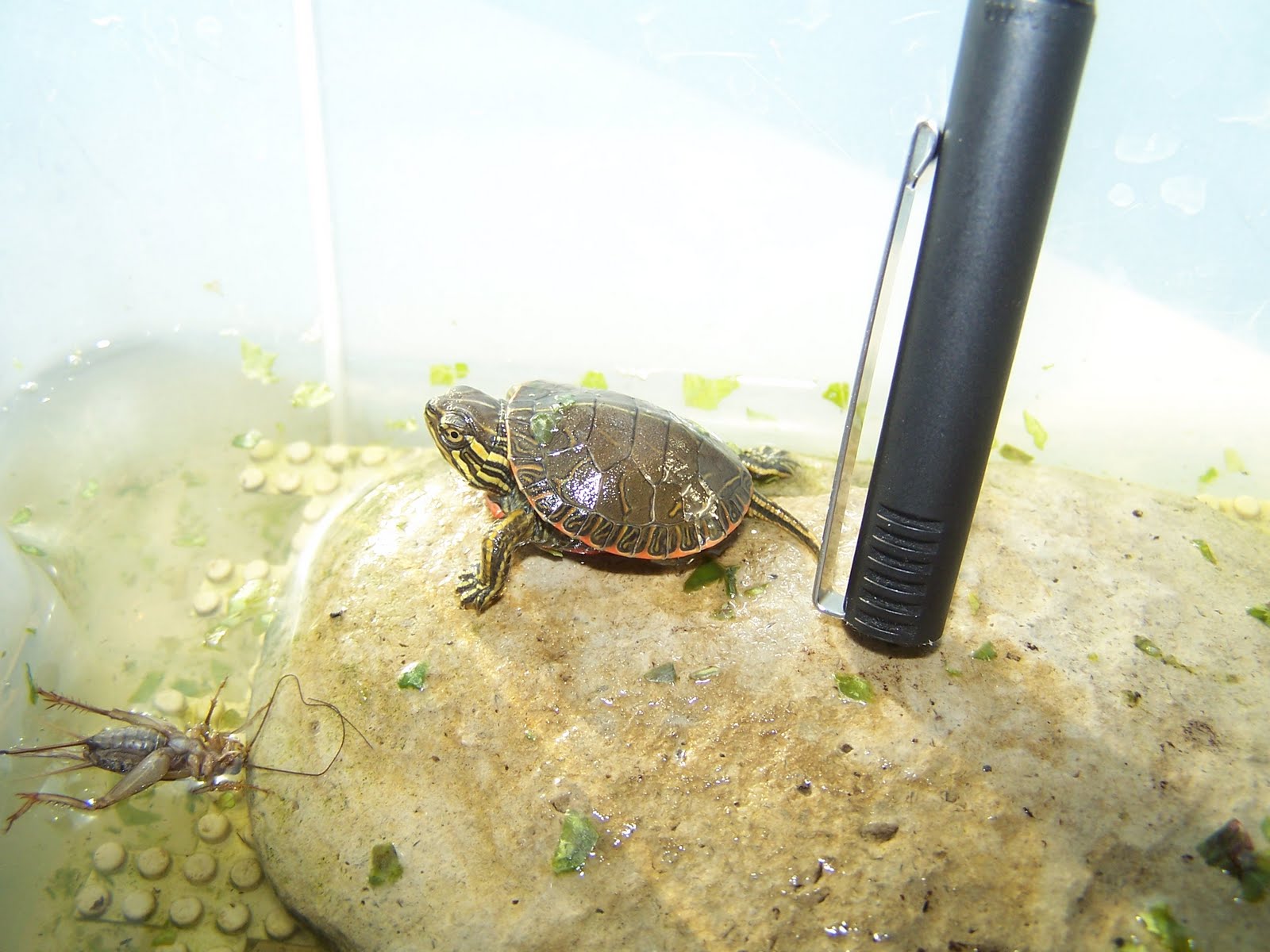
Isn't this the cutest tiny painted turtle ever?!?! People "rescued" it after it hatched (remember--turtles are never orphans--they fully function right after they hatch and never spend any time with mom). Anyway, they are sick now since the finders kept them in sub-par conditions for 2 months. Hopefully they'll pull through as well!
This guy is so cool! He's only ~150 grams--a long tailed weasel! He somehow got caught in a live trap for mice (which is ironic b/c he eats them!) the finders were happy to take him back so he could naturally hunt the mice they didn't want. he looks grubby b/c he's been stuck in a tiny trap for a day.

Hope everyone is doing well!

Thursday, September 23, 2010

fox w/ mange


I think i'll try to make my posts shorter but more frequent....less words more pictures;)

Here is a juvenile fox we got in with mange 6 weeks ago.....
I did a skin scrape and saw a TON of mites. I sent the slide to a small animal practitioner and she said she'd never seen that many....ever....hee hee

After 6 weeks of anti-parasite medications, here is how he looks!

easy peasy:)

Tuesday, September 14, 2010

spiny softshell, woodchuck going to WLS and more!


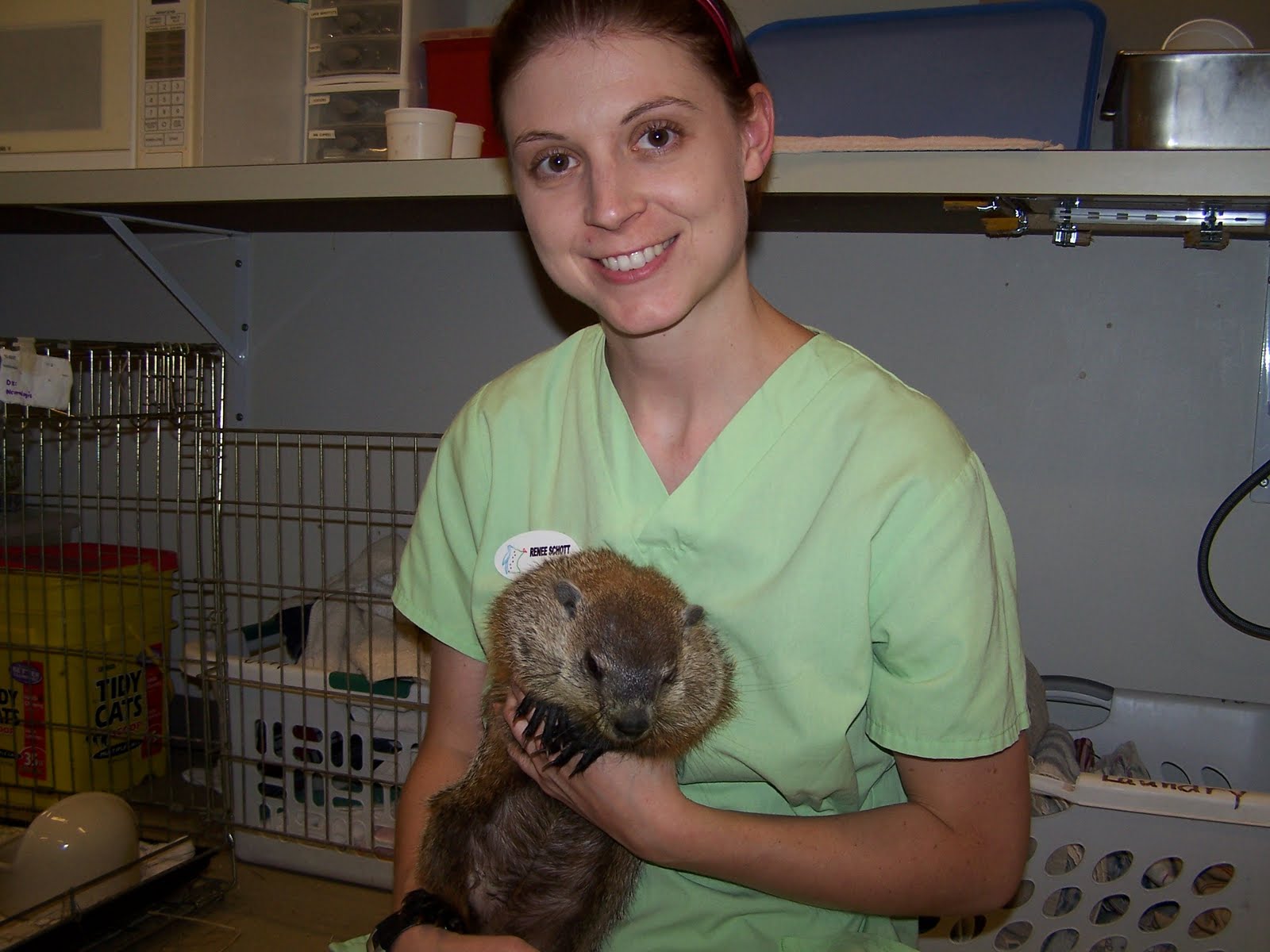
I've gotten a few woodchucks in this year with neurological issues. They are unbalanced, fall over or just don't act right. It could be caused by head trauma (ie hit by car) or an infectious disease (ie bacterial brain infection or random parasite migration through the brain) or something else. This adult female has not recovered and is still a bit wobbly, along with not fearing humans--hence why I'm holding her. If she was "right in the head" she would be biting me hard (her teeth are long and could take my finger off!) I would never hold a woodchuck like this unless I was very, very experienced and sure she wasn't going to bite. That being said, she has brain damage, and I can't predict if she'll decide to turn on me and take a Nay snack. But that's the risk I'm taking.
Bottom line:
Don't EVER handle a wild animal unless you've been trained to do so.
Anyway, since she wouldn't survive in the wild, she's found a new home at the Bay Beach Wildlife Sanctuary as an education animal!! I'm so excited that she'll be going to such a good home and will get to be an ambassador for wildlife in education programs.


Last week we got in this small spiny soft shell turtle. These turtles don't have a hard shell like the ones we're used to; they have a soft, leathery shell. They live at the bottoms of rivers, in the muck. This turtle was brought in because some people thought he was an orphan. Just like other turtles, "baby" spiny softshells are on their own from day 1 because mom doesn't stick around after she lays her eggs. So it's really impossible for a turtle to be an orphan---or all they all orphans?

Friday, July 30, 2010

Glue Traps

Sadly, many of the animals we treat in the clinic are there because human-induced injuries. One of the most frustrating are glue traps. Glue traps are pieces of cardboard with a sticky gel on top that is marketed as a rodent trap. What happens is the rodent runs across it and becomes stuck to the gel. The rodents are then stuck there to die of starvation and many have been known to chew their legs off in desperation to get away.

The whole concept of the glue trap in regards to rodents is inhumane; it is even more frustrating when other species become stuck to these traps. Songbirds often come in stuck to these traps. If they are alive when they get to us, they require several baths in alternating baths of vegetable oil (to release them from the glue and wash off feather contamination) and dawn dishsoap (to wash the oil off) . This process is very stressful for the bird.

The other day 3 bats, a big brown and two nothern (keen's) myotis, were brought in having been stuck to a glue trap. As we examined the bats, we were very saddened to see the destruction glue traps can do. All three bats had fractured bones and wing-webbing ripped off. The bones were amputated (not attached to the bats) and once wing webbing is torn, it cannot be repaired. These injuries necessitated humane euthanasia.

We can only hope that those who read this post will pass on the knowledge of dangers of glue traps, in hopes that people will stop using them.

I'm going to refrain from posting pictures as some may find them graphic.